Whisky is not just a spirit. It is a product of quality, tradition, craftsmanship, and time. Therefore, every bottle of whisky tells a story, beginning with refined grains rewarded with a carefully matured spirit resting in oak barrels. Let´s decode the production of whisky.
Understanding how whisky is made allows enthusiasts to appreciate the complexity behind every sip. Furthermore, selecting the right barley for the ageing process in oak casks, every stage contributes to the character, aroma, and flavour of the final whisky.
Legal Definition of Scotch Whisky
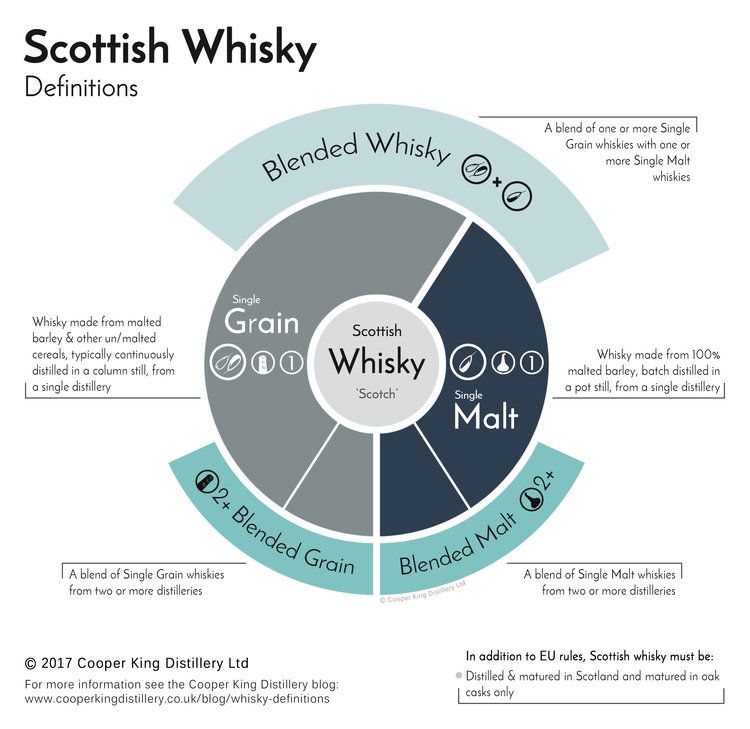
As of November 2009, the Scotch Whisky Regulations 2009 replaced previous laws that focused solely on production, including the Scotch Whisky Act 1988
There are various types of scotch whisky. However, the regulations established clear guidelines to protect the authenticity and identity of Scotch whisky.
Some important points include:
- Scotch whisky must be made from malted barley and water, with other cereal grains allowed as optional ingredients only.
- The grains must be mashed, fermented, and distilled to not more than 94.8% ABV.
- It must be matured in oak casks of no more than 700 litres for a minimum of three years in Scotland.
- The whisky must not contain additives other than water and caramel colouring code (E150a).
- The spirit must retain the character, aroma, and taste derived from the raw materials and production methods.
- Scotch whisky must be bottled at not less than 40% ABV.
Mashing refers to the process where hot water is introduced to ground grain to convert starch into fermentable sugars.
Scotch Whisky Regions
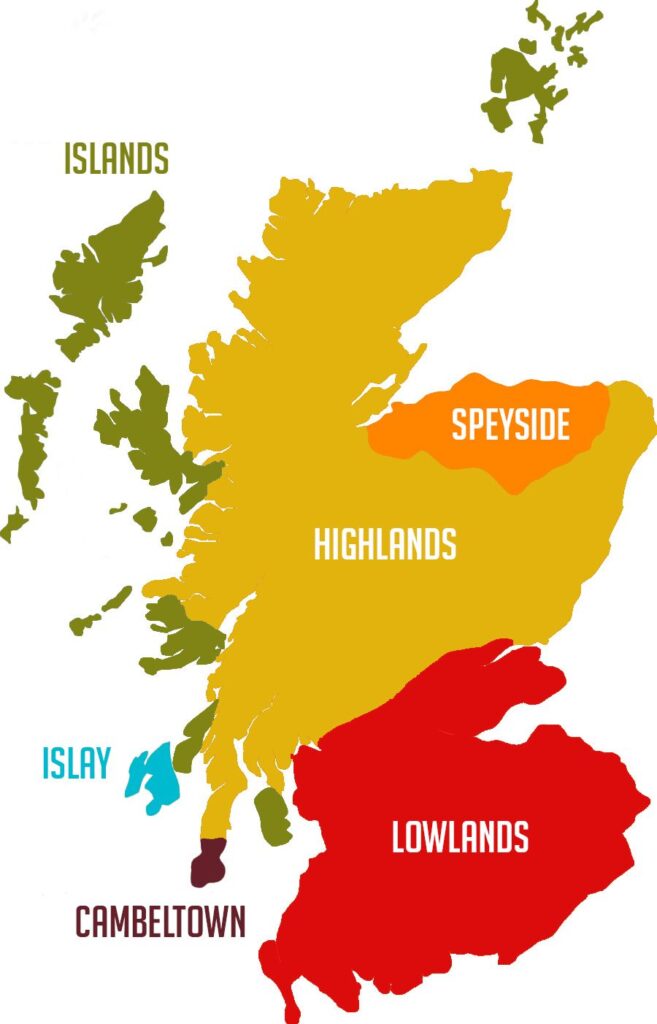
Scotland is divided into several whisky-producing regions, each known for distinct flavour characteristics and traditions.
The major regions include:
- Scottish Highlands
- Scottish Lowlands
- Speyside
- Campbeltown
- Islay
- Orkney
- Isle of Mull
- Isle of Skye
- Isle of Jura
Each region consequently contributes unique flavour profiles, from the smoky, peaty whiskies of Islay to the elegant, fruity expressions of Speyside.
Pro note – Islay (pronounced as I-La) is known for its peated whisky, where the peat is smoked, giving the whisky its flavour. For example – Teacher’s whisky
Barley Used in Whisky Production
Barley is one of the most important ingredients in whisky production. Distilleries often use specific barley varieties that provide consistent starch levels and yield during fermentation.
Some commonly used barley varieties include:
- Optic
- Belgravia
- Concerto
- Golden Promise
These varieties are selected because they provide efficient fermentation and desirable flavour development during the whisky-making process.
Disclaimer: Images and external links used in this article are for informational and illustrative purposes only. Credits belong to their respective owners unless otherwise stated
No responses yet